May 10, 2026
BandOps: From Design to Deployment for Live Music Operations
BandOps is a side project built to simplify the operational chaos behind managing live music performances. Designed and developed using tools like Claude, Google Stitch, Cursor, Next.js, and Supabase, the project combines AI-assisted workflows with structured product thinking to take an idea from research to a live deployed product.
Side Project
Vibe Code
The Problem
Why I Built BandOps
Executive Summary
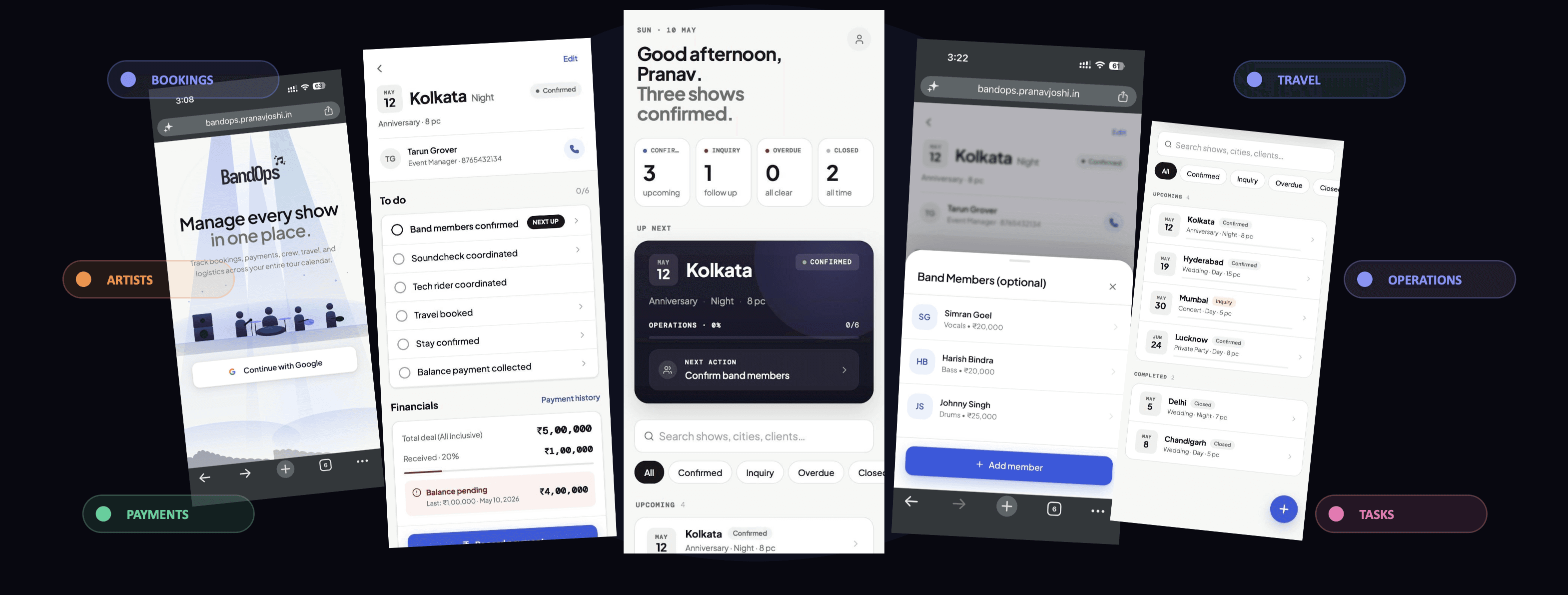
BandOps is a live music operations platform designed to simplify the logistical chaos behind managing shows, artists, payments, travel, and coordination.
Built and piloted in just 3 weeks, the product emerged from firsthand exposure to operational challenges faced by independent bands and artist managers. The project combined rapid research, AI-assisted workflows, structured product thinking, interface design, and full-stack development into a live production pilot currently being tested with real users.
The case study explores how AI accelerated the product creation process across wireframing, visual design, and engineering, while highlighting the continued importance of human judgment in product strategy, usability, and execution.
———————————————————-
Context
Coming from an events background and growing up around live musicians, I kept seeing the same operational problems repeat themselves.
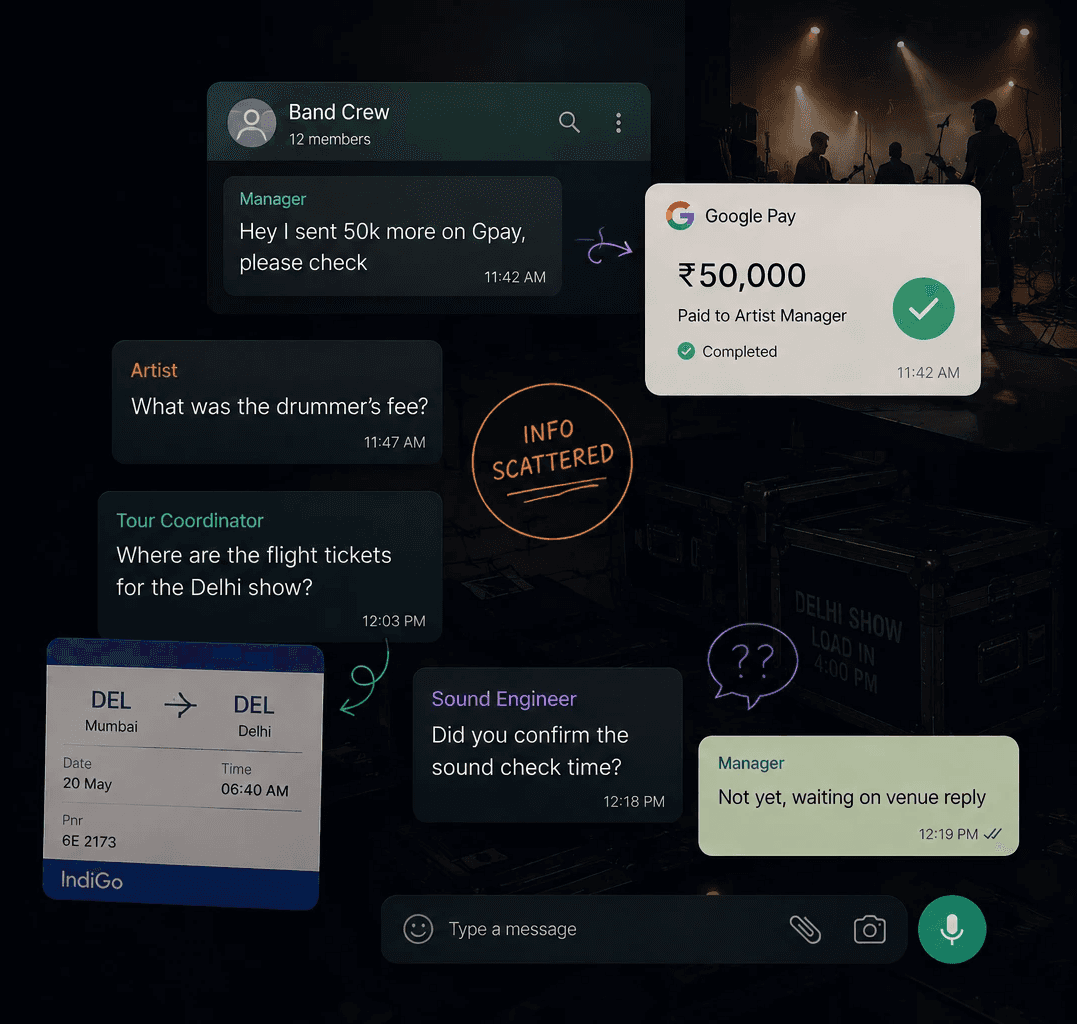
Most independent bands and artist managers relied heavily on WhatsApp chats, Excel sheets, and memory to manage operations.
This created several issues:
No single source of truth
Payment confusion and settlement disputes
Coordination chaos across artists, venues, and vendors
No structured workflow for show execution
BandOps started as an attempt to centralize and simplify these workflows into one operational system.
Product Scope
What BandOps Helps Manage
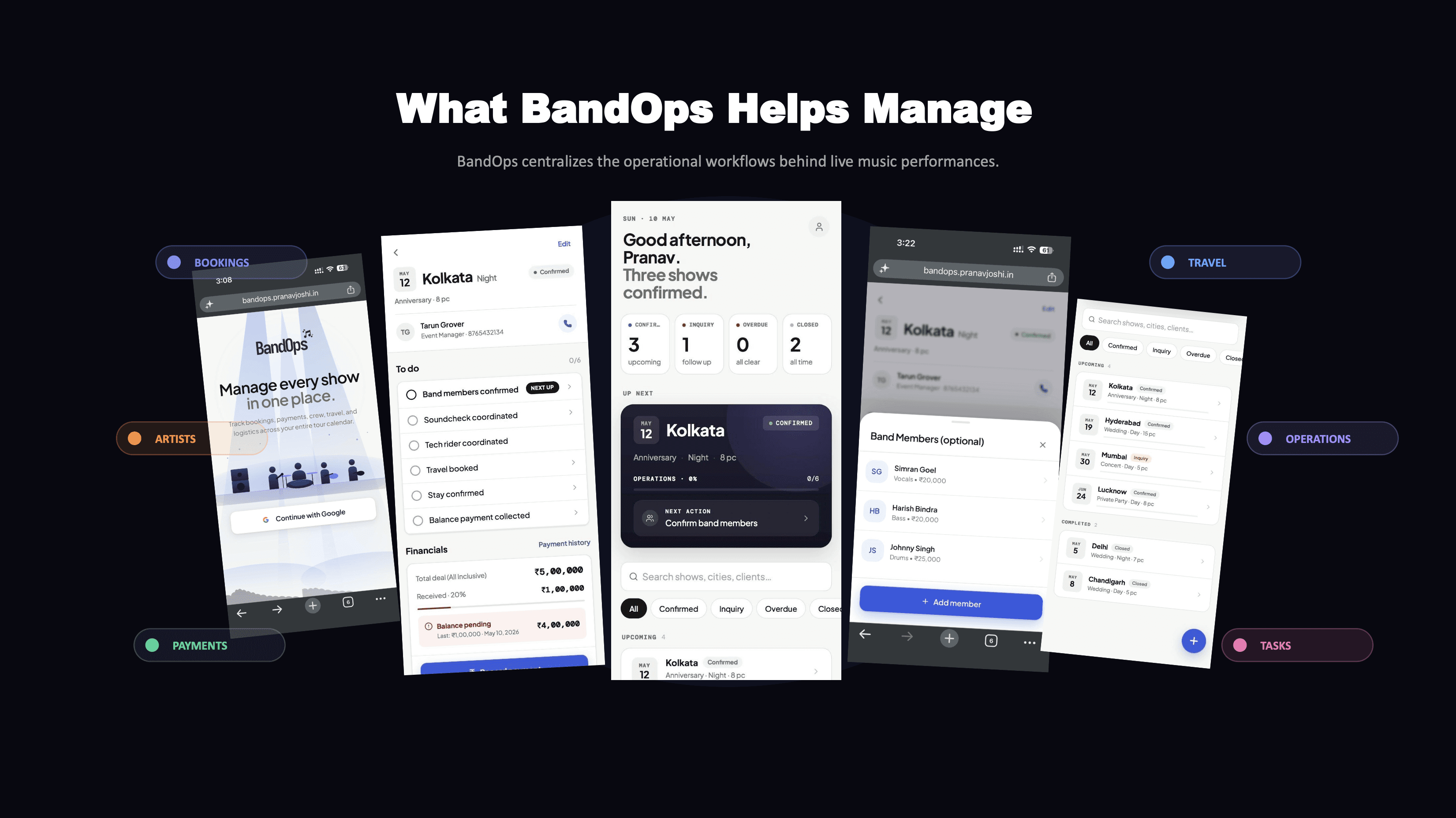
BandOps centralizes the operational workflows behind live music performances.
The MVP focused on helping teams manage:
Bookings
Artists
Payments
Travel
Operations
Tasks
The product was intentionally scoped around real workflows observed during research conversations with artist managers.
Process
Accelerated with AI, refined through structured product thinking
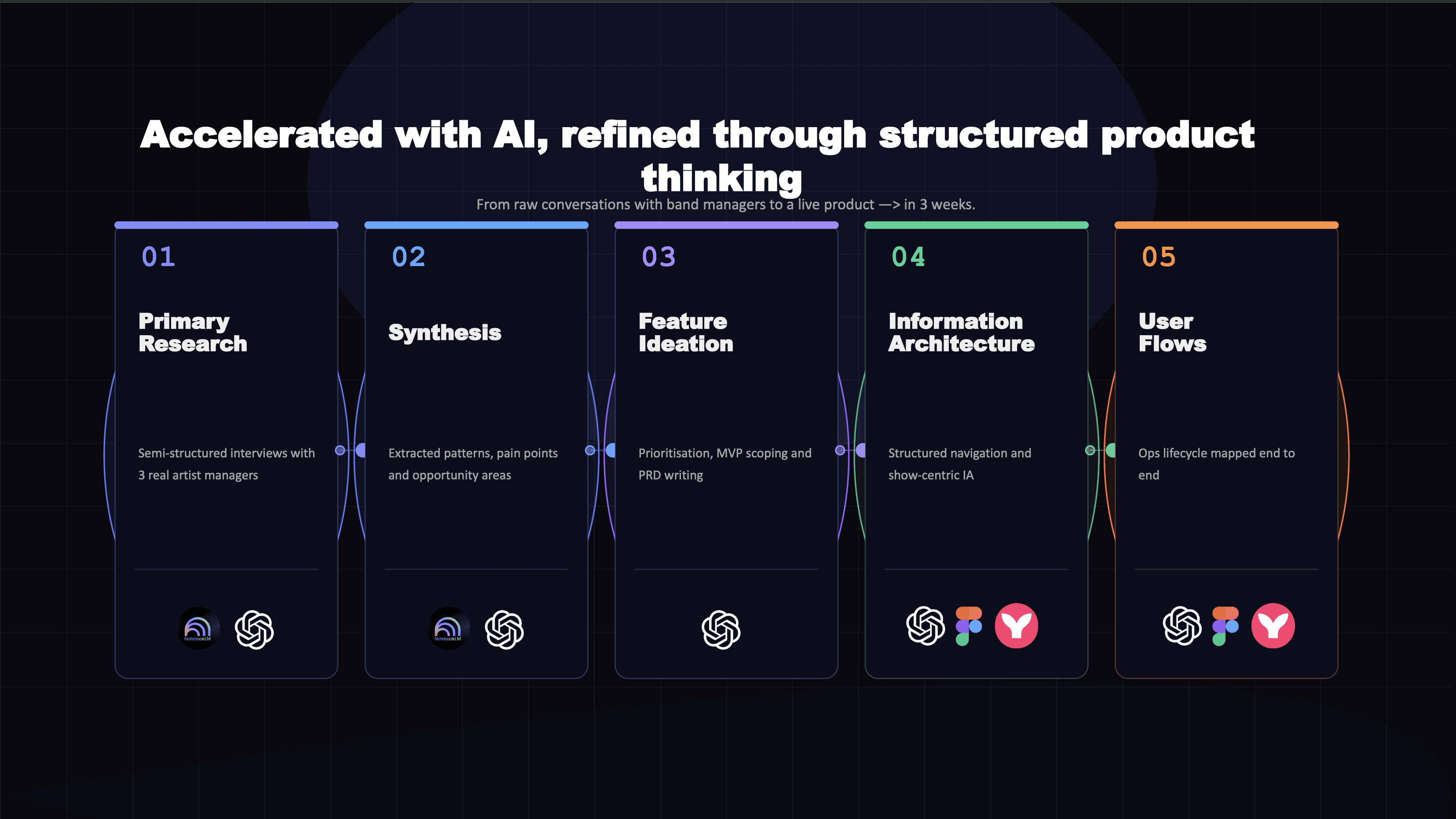
The project moved from raw conversations to a live deployed product in just 3 weeks.
The process included:
Primary research with real artist managers
Synthesizing operational pain points
Feature prioritization and MVP scoping
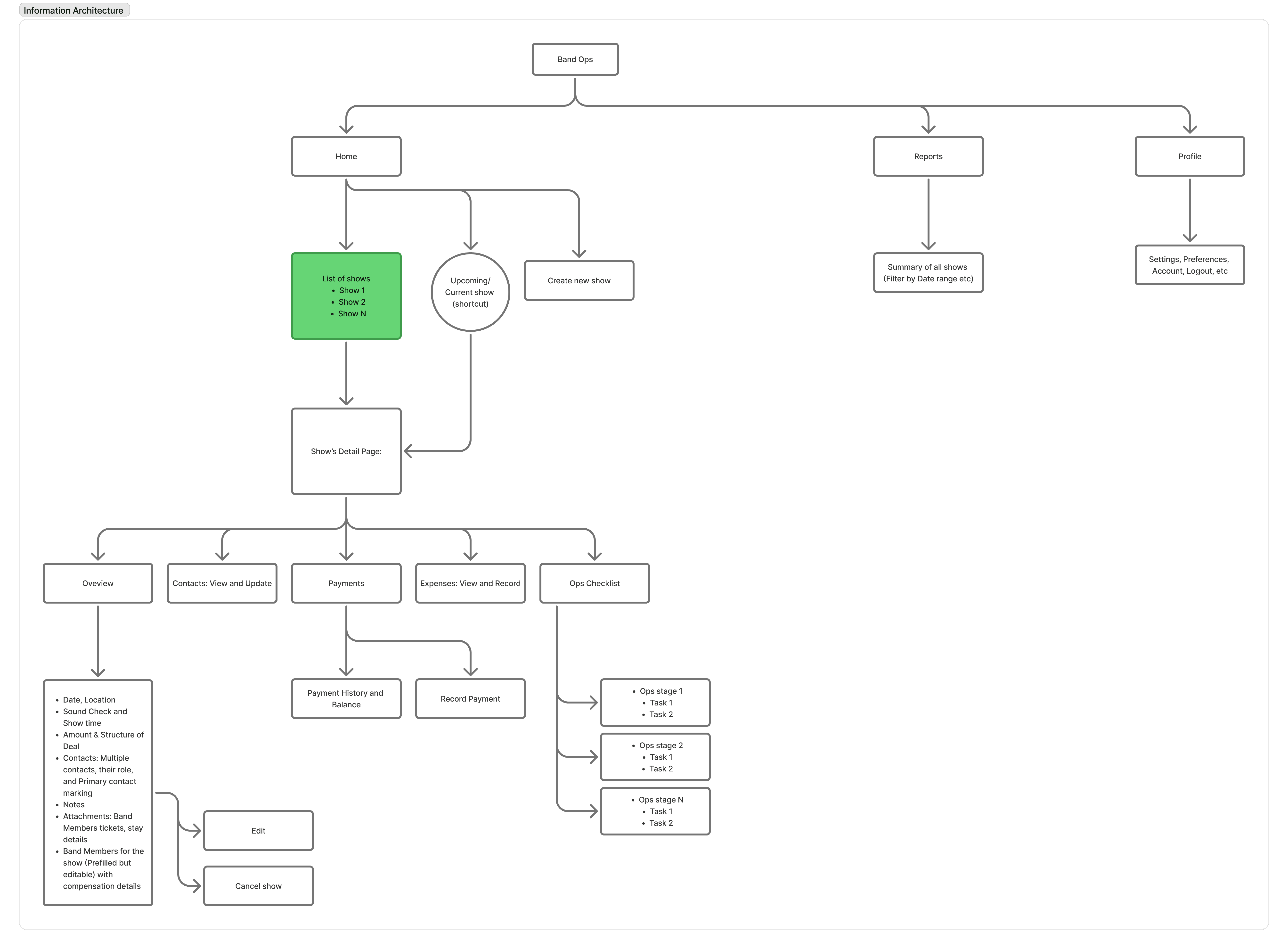
Structuring the information architecture
Mapping end-to-end operational workflows
AI tools accelerated execution speed, but the product direction and prioritization decisions remained grounded in structured product thinking.
Wireframing
AI-Assisted Wireframing
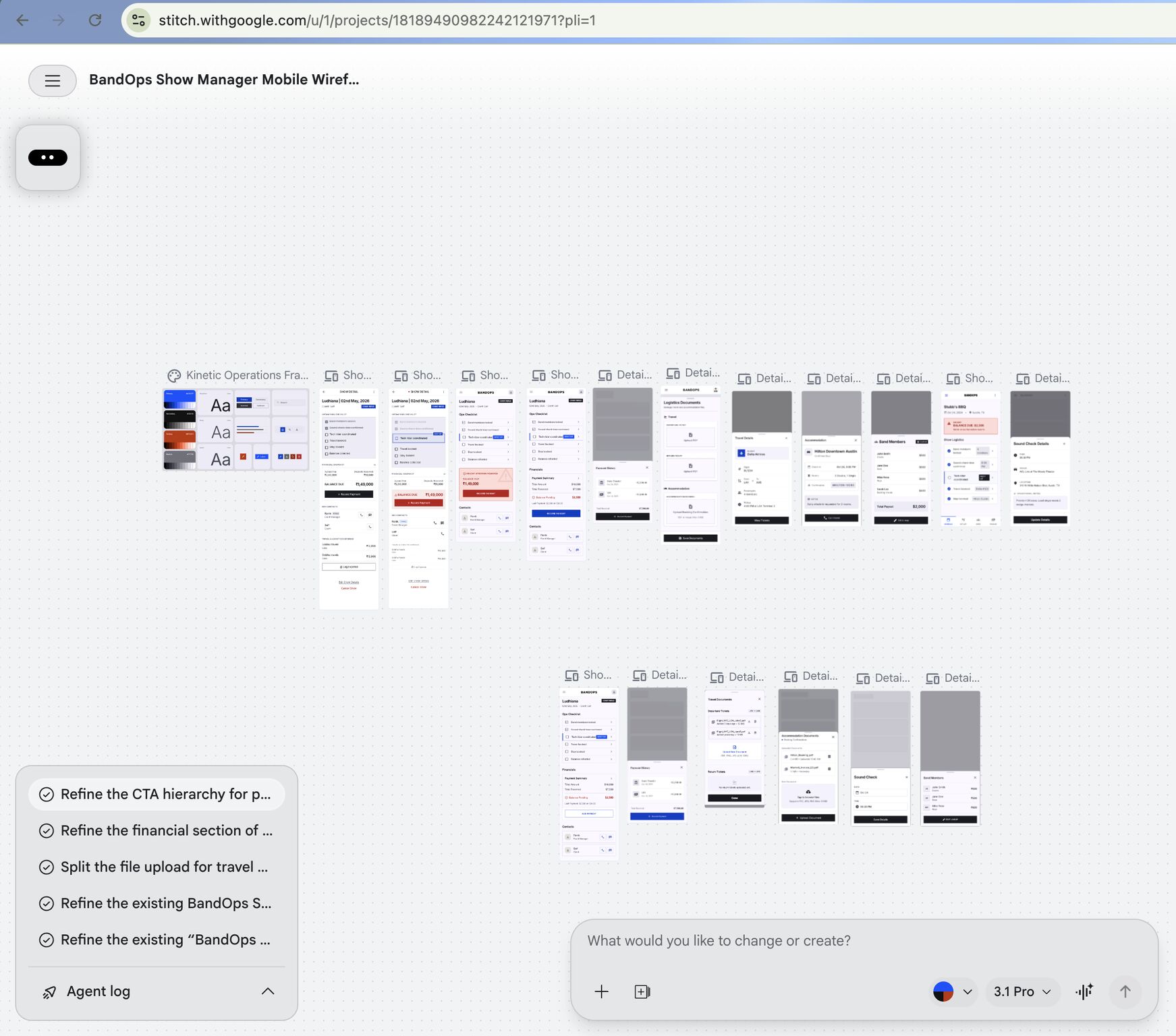
Google Stitch was used for rapid layout and interaction exploration before committing to final directions.
This made it possible to:
Iterate on ideas extremely quickly
Explore multiple layouts with low friction
Validate flows before refinement
Once promising directions emerged, the wireframes were refined further in Figma to improve usability, hierarchy, and clarity.
The process highlighted how AI can dramatically accelerate exploration, while human judgment remains essential for refinement.
Visual Design
Designing The Interface
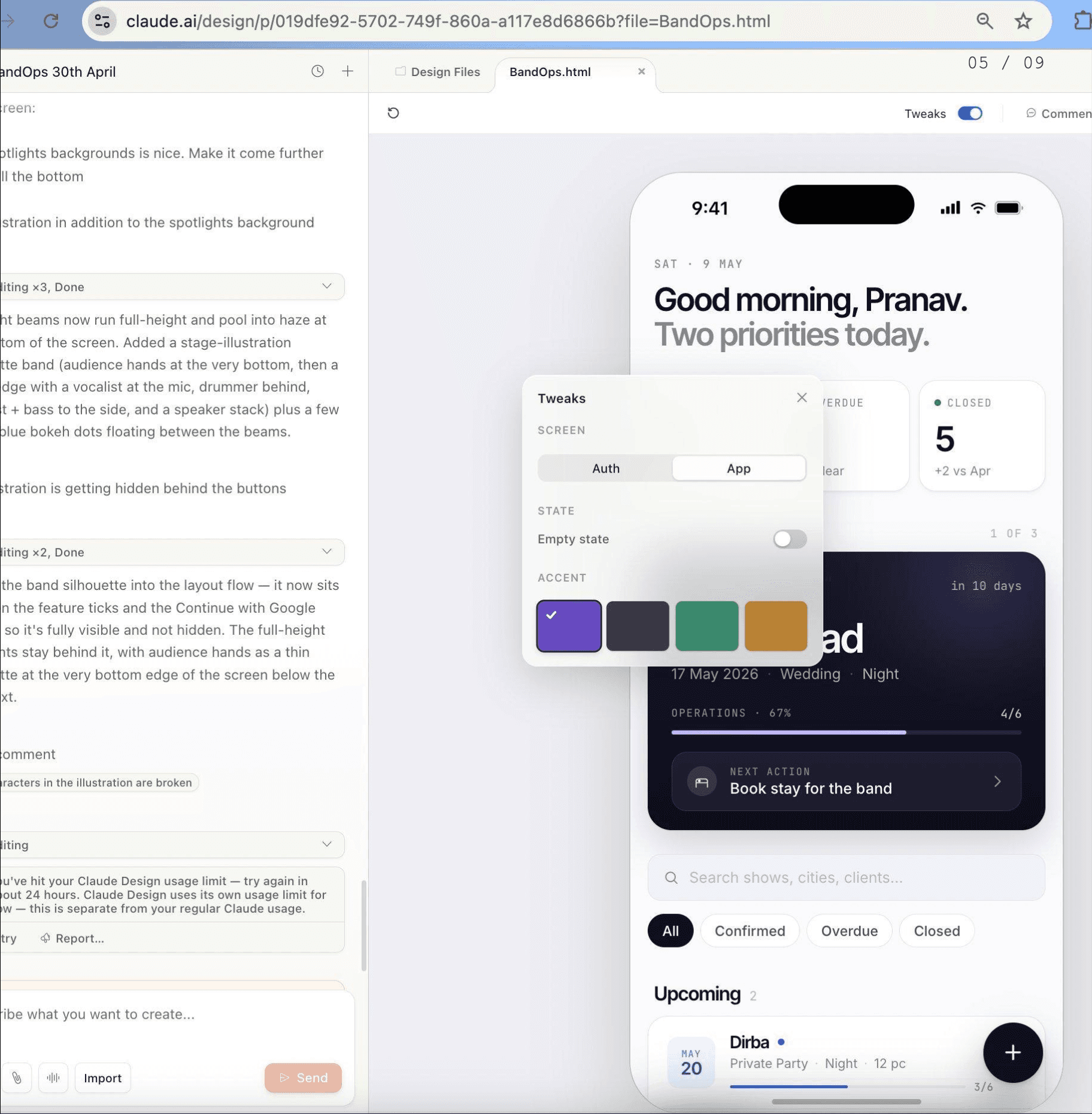
Multiple AI design tools were tested during the visual design phase, with Claude Design standing out significantly for layout quality and visual consistency.
The workflow enabled:
Faster visual exploration
Consistent UI patterns across screens
Natural iterative prompting workflows
One real limitation encountered during the process was the high token usage involved in continuous design iteration, which created practical workflow constraints.
This phase reinforced the idea that AI tools are becoming strong creative collaborators, but operational limitations still impact production workflows.
Development
Turning Designs Into A Working Product
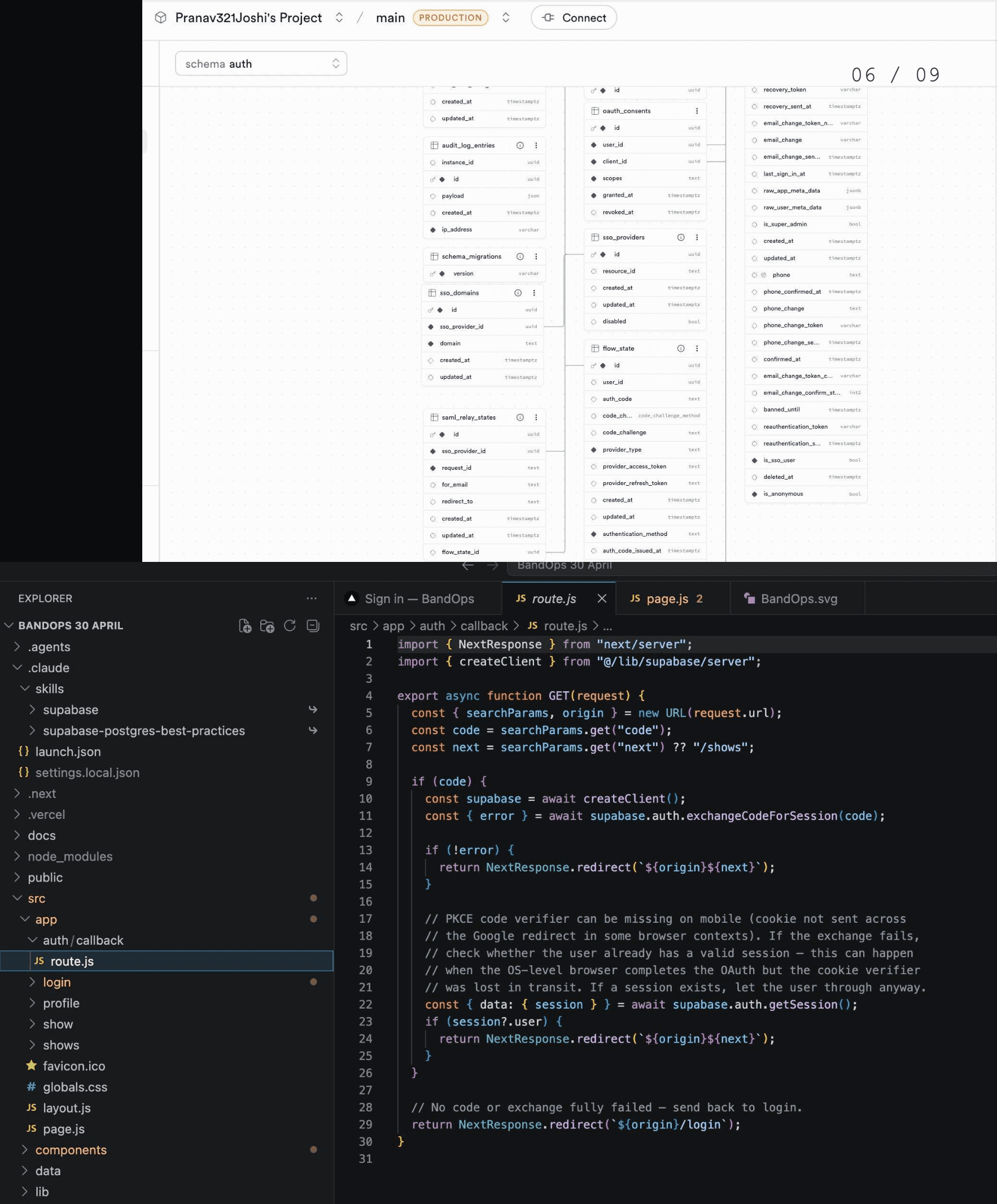
The product moved directly from wireframes into code using AI-assisted engineering workflows.
I built:
Frontend application
Database architecture
Backend logic
Authentication system
Tech stack:
Next.js
Supabase
Claude Code
VS Code
Cursor
Google OAuth
AI acted as an engineering assistant throughout the process, helping accelerate implementation while maintaining product control and decision-making.
Shipping
Deployed & Live
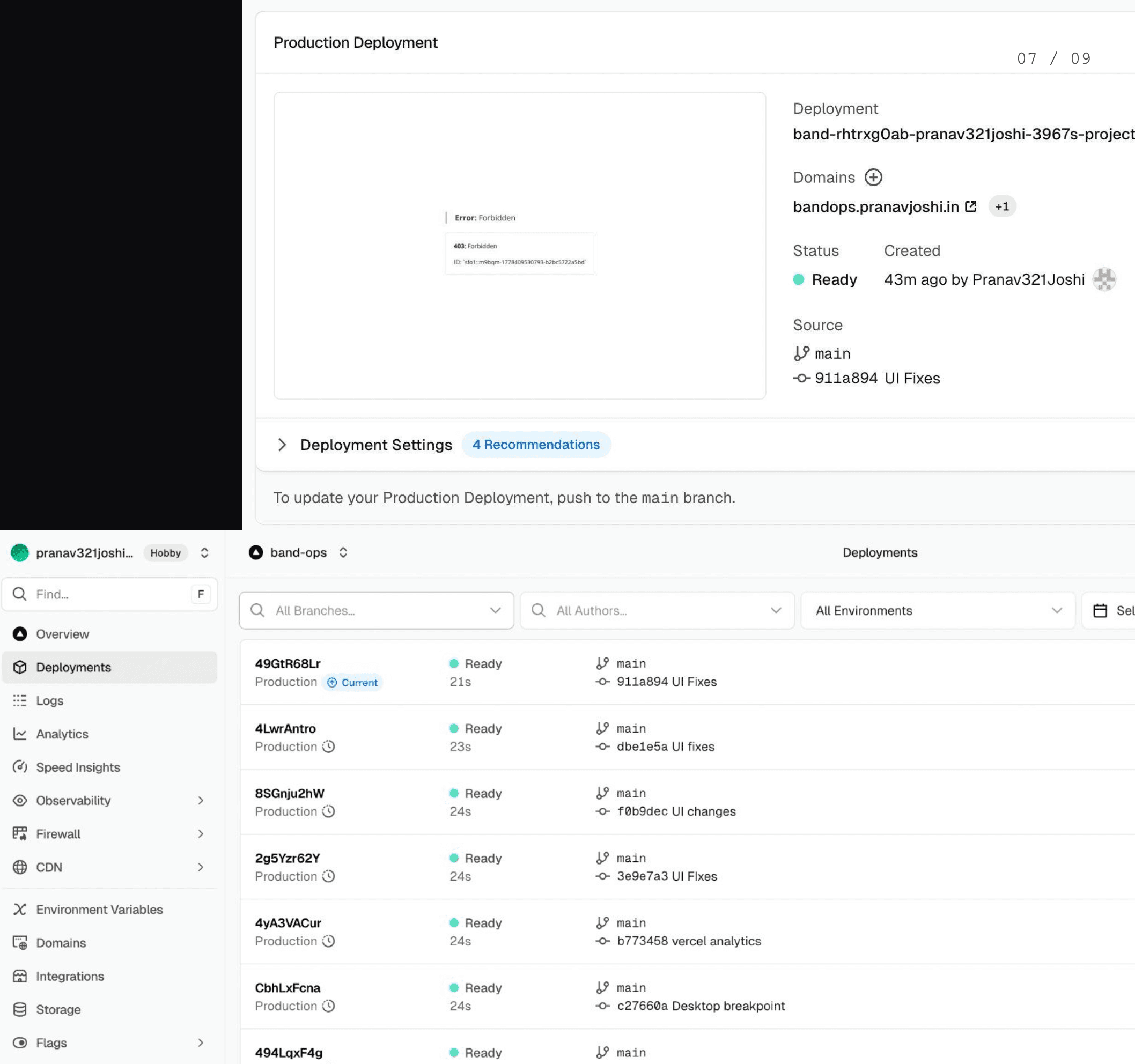
BandOps was deployed as a live production pilot using:
Vercel
Supabase
GitHub CI
Custom domain infrastructure
The deployment workflow enabled near-instant production releases directly from the main branch.
This allowed rapid iteration cycles between feedback, fixes, and live deployment.
Pilot & Validation
Product In The Wild
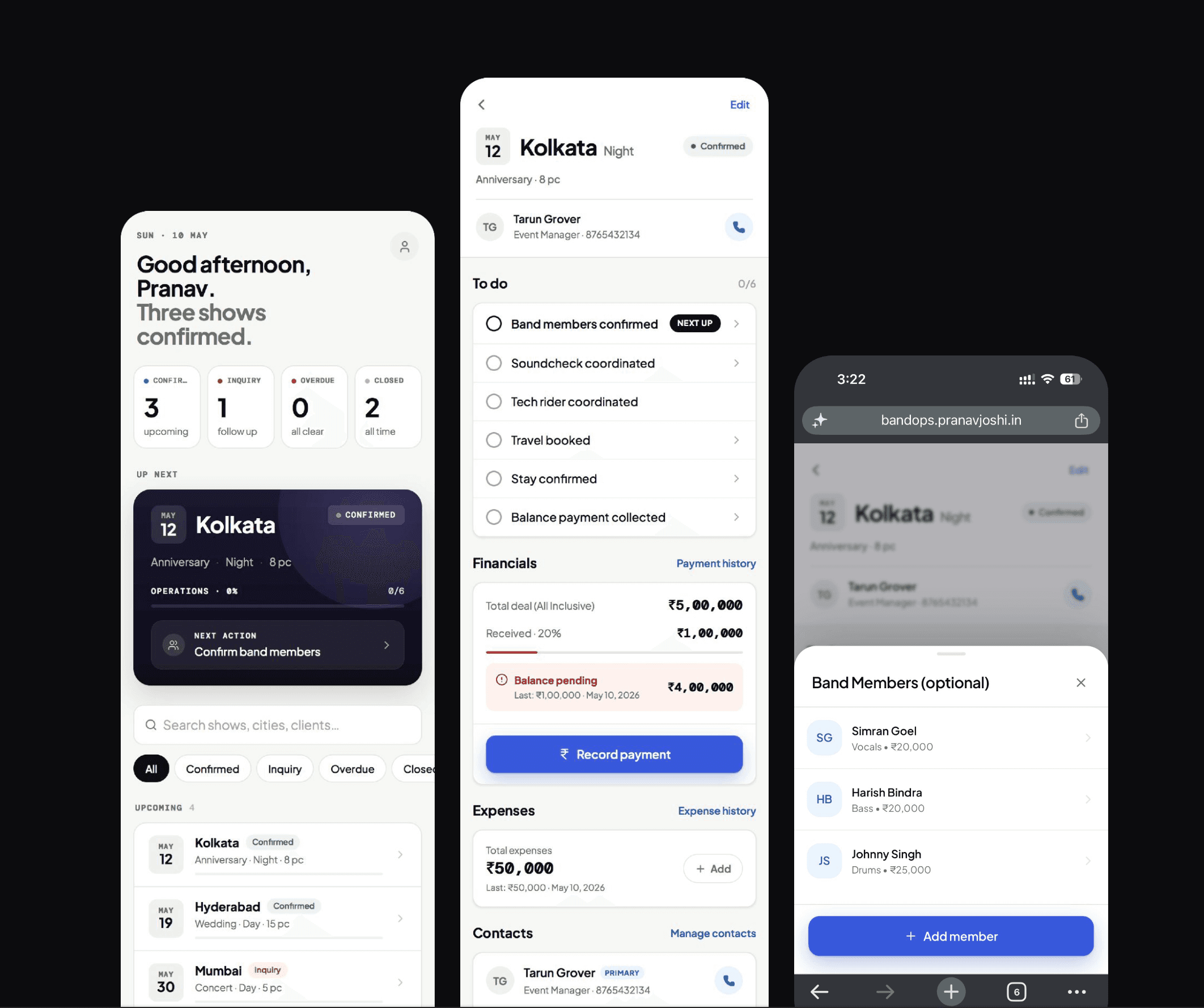
BandOps is currently being used in a live pilot with real bands and real shows.
This phase is focused on collecting:
Workflow feedback
Feature requests
Usability insights
Operational edge cases
Real-world usage exposed product realities much faster than isolated design exercises or static prototypes.
The live pilot continues to shape the roadmap and future direction of the product.
Roadmap
What’s Next
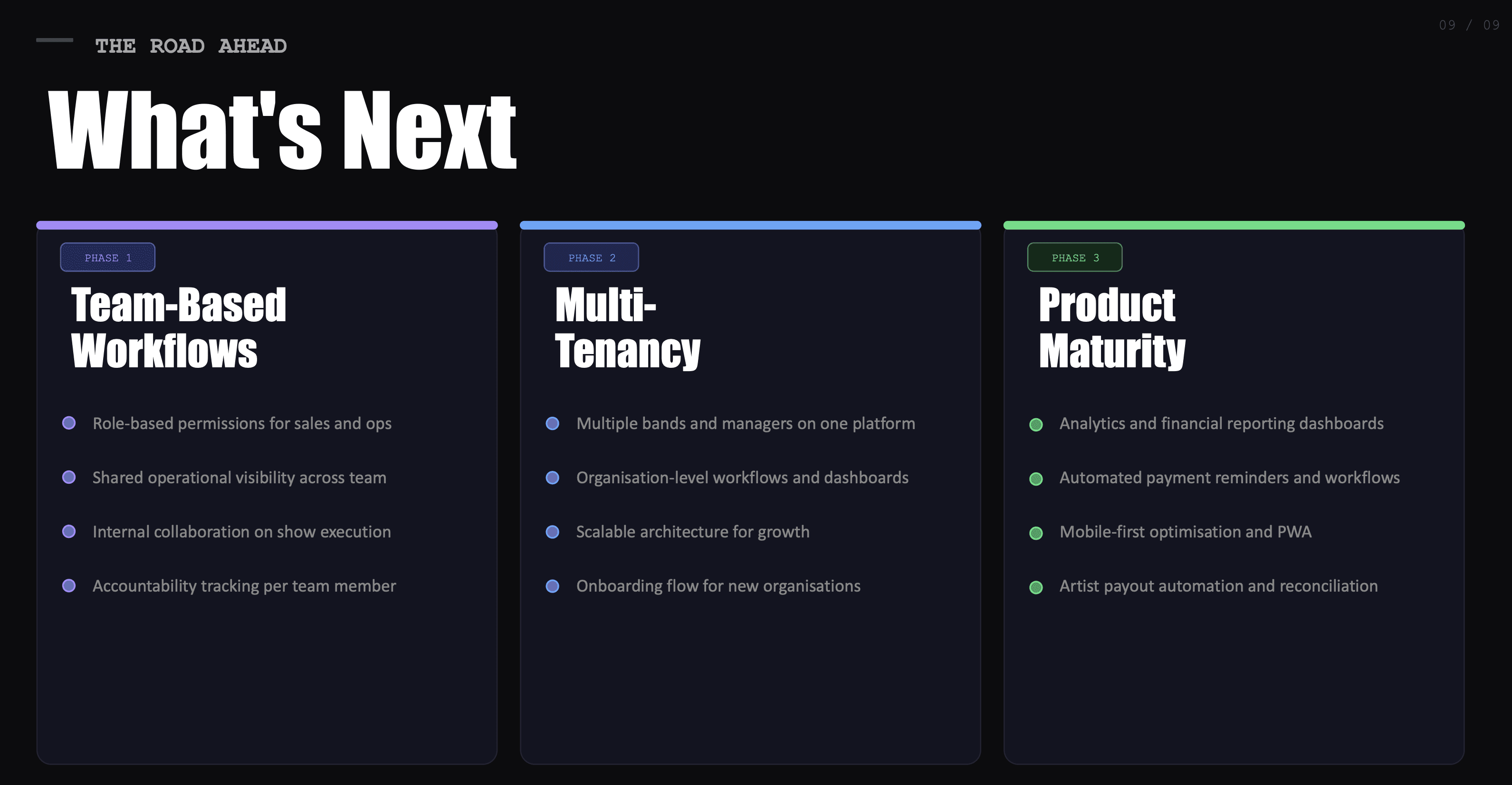
The roadmap for BandOps is divided into three phases.
Phase 1 focuses on team-based workflows:
Role-based permissions
Shared operational visibility
Internal collaboration tools
Accountability tracking
Phase 2 focuses on multi-tenancy:
Multiple bands on one platform
Organization-level workflows
Scalable architecture
Organization onboarding
Phase 3 focuses on product maturity:
Analytics dashboards
Automated payment workflows
Mobile-first optimization
Artist payout reconciliation
BandOps started as a side project, but is now evolving into a real product shaped by real users.
More Works
FAQ
01
What kind of projects have you worked on?
02
How do you usually collaborate on projects?
03
Do you take freelance or consulting projects?
04
What tools do you use?
05
How do you approach new projects?
06
Can you help set up a design system?
07
How can I get in touch?
May 10, 2026
BandOps: From Design to Deployment for Live Music Operations
BandOps is a side project built to simplify the operational chaos behind managing live music performances. Designed and developed using tools like Claude, Google Stitch, Cursor, Next.js, and Supabase, the project combines AI-assisted workflows with structured product thinking to take an idea from research to a live deployed product.
Side Project
Vibe Code
The Problem
Why I Built BandOps
Executive Summary
BandOps is a live music operations platform designed to simplify the logistical chaos behind managing shows, artists, payments, travel, and coordination.
Built and piloted in just 3 weeks, the product emerged from firsthand exposure to operational challenges faced by independent bands and artist managers. The project combined rapid research, AI-assisted workflows, structured product thinking, interface design, and full-stack development into a live production pilot currently being tested with real users.
The case study explores how AI accelerated the product creation process across wireframing, visual design, and engineering, while highlighting the continued importance of human judgment in product strategy, usability, and execution.
———————————————————-
Context
Coming from an events background and growing up around live musicians, I kept seeing the same operational problems repeat themselves.
Most independent bands and artist managers relied heavily on WhatsApp chats, Excel sheets, and memory to manage operations.
This created several issues:
No single source of truth
Payment confusion and settlement disputes
Coordination chaos across artists, venues, and vendors
No structured workflow for show execution
BandOps started as an attempt to centralize and simplify these workflows into one operational system.
Product Scope
What BandOps Helps Manage
BandOps centralizes the operational workflows behind live music performances.
The MVP focused on helping teams manage:
Bookings
Artists
Payments
Travel
Operations
Tasks
The product was intentionally scoped around real workflows observed during research conversations with artist managers.
Process
Accelerated with AI, refined through structured product thinking
The project moved from raw conversations to a live deployed product in just 3 weeks.
The process included:
Primary research with real artist managers
Synthesizing operational pain points
Feature prioritization and MVP scoping
Structuring the information architecture
Mapping end-to-end operational workflows
AI tools accelerated execution speed, but the product direction and prioritization decisions remained grounded in structured product thinking.
Wireframing
AI-Assisted Wireframing
Google Stitch was used for rapid layout and interaction exploration before committing to final directions.
This made it possible to:
Iterate on ideas extremely quickly
Explore multiple layouts with low friction
Validate flows before refinement
Once promising directions emerged, the wireframes were refined further in Figma to improve usability, hierarchy, and clarity.
The process highlighted how AI can dramatically accelerate exploration, while human judgment remains essential for refinement.
Visual Design
Designing The Interface
Multiple AI design tools were tested during the visual design phase, with Claude Design standing out significantly for layout quality and visual consistency.
The workflow enabled:
Faster visual exploration
Consistent UI patterns across screens
Natural iterative prompting workflows
One real limitation encountered during the process was the high token usage involved in continuous design iteration, which created practical workflow constraints.
This phase reinforced the idea that AI tools are becoming strong creative collaborators, but operational limitations still impact production workflows.
Development
Turning Designs Into A Working Product
The product moved directly from wireframes into code using AI-assisted engineering workflows.
I built:
Frontend application
Database architecture
Backend logic
Authentication system
Tech stack:
Next.js
Supabase
Claude Code
VS Code
Cursor
Google OAuth
AI acted as an engineering assistant throughout the process, helping accelerate implementation while maintaining product control and decision-making.
Shipping
Deployed & Live
BandOps was deployed as a live production pilot using:
Vercel
Supabase
GitHub CI
Custom domain infrastructure
The deployment workflow enabled near-instant production releases directly from the main branch.
This allowed rapid iteration cycles between feedback, fixes, and live deployment.
Pilot & Validation
Product In The Wild
BandOps is currently being used in a live pilot with real bands and real shows.
This phase is focused on collecting:
Workflow feedback
Feature requests
Usability insights
Operational edge cases
Real-world usage exposed product realities much faster than isolated design exercises or static prototypes.
The live pilot continues to shape the roadmap and future direction of the product.
Roadmap
What’s Next
The roadmap for BandOps is divided into three phases.
Phase 1 focuses on team-based workflows:
Role-based permissions
Shared operational visibility
Internal collaboration tools
Accountability tracking
Phase 2 focuses on multi-tenancy:
Multiple bands on one platform
Organization-level workflows
Scalable architecture
Organization onboarding
Phase 3 focuses on product maturity:
Analytics dashboards
Automated payment workflows
Mobile-first optimization
Artist payout reconciliation
BandOps started as a side project, but is now evolving into a real product shaped by real users.
More Works
FAQ
01
What kind of projects have you worked on?
02
How do you usually collaborate on projects?
03
Do you take freelance or consulting projects?
04
What tools do you use?
05
How do you approach new projects?
06
Can you help set up a design system?
07
How can I get in touch?
May 10, 2026
BandOps: From Design to Deployment for Live Music Operations
BandOps is a side project built to simplify the operational chaos behind managing live music performances. Designed and developed using tools like Claude, Google Stitch, Cursor, Next.js, and Supabase, the project combines AI-assisted workflows with structured product thinking to take an idea from research to a live deployed product.
Side Project
Vibe Code
The Problem
Why I Built BandOps
Executive Summary
BandOps is a live music operations platform designed to simplify the logistical chaos behind managing shows, artists, payments, travel, and coordination.
Built and piloted in just 3 weeks, the product emerged from firsthand exposure to operational challenges faced by independent bands and artist managers. The project combined rapid research, AI-assisted workflows, structured product thinking, interface design, and full-stack development into a live production pilot currently being tested with real users.
The case study explores how AI accelerated the product creation process across wireframing, visual design, and engineering, while highlighting the continued importance of human judgment in product strategy, usability, and execution.
———————————————————-
Context
Coming from an events background and growing up around live musicians, I kept seeing the same operational problems repeat themselves.
Most independent bands and artist managers relied heavily on WhatsApp chats, Excel sheets, and memory to manage operations.
This created several issues:
No single source of truth
Payment confusion and settlement disputes
Coordination chaos across artists, venues, and vendors
No structured workflow for show execution
BandOps started as an attempt to centralize and simplify these workflows into one operational system.
Product Scope
What BandOps Helps Manage
BandOps centralizes the operational workflows behind live music performances.
The MVP focused on helping teams manage:
Bookings
Artists
Payments
Travel
Operations
Tasks
The product was intentionally scoped around real workflows observed during research conversations with artist managers.
Process
Accelerated with AI, refined through structured product thinking
The project moved from raw conversations to a live deployed product in just 3 weeks.
The process included:
Primary research with real artist managers
Synthesizing operational pain points
Feature prioritization and MVP scoping
Structuring the information architecture
Mapping end-to-end operational workflows
AI tools accelerated execution speed, but the product direction and prioritization decisions remained grounded in structured product thinking.
Wireframing
AI-Assisted Wireframing
Google Stitch was used for rapid layout and interaction exploration before committing to final directions.
This made it possible to:
Iterate on ideas extremely quickly
Explore multiple layouts with low friction
Validate flows before refinement
Once promising directions emerged, the wireframes were refined further in Figma to improve usability, hierarchy, and clarity.
The process highlighted how AI can dramatically accelerate exploration, while human judgment remains essential for refinement.
Visual Design
Designing The Interface
Multiple AI design tools were tested during the visual design phase, with Claude Design standing out significantly for layout quality and visual consistency.
The workflow enabled:
Faster visual exploration
Consistent UI patterns across screens
Natural iterative prompting workflows
One real limitation encountered during the process was the high token usage involved in continuous design iteration, which created practical workflow constraints.
This phase reinforced the idea that AI tools are becoming strong creative collaborators, but operational limitations still impact production workflows.
Development
Turning Designs Into A Working Product
The product moved directly from wireframes into code using AI-assisted engineering workflows.
I built:
Frontend application
Database architecture
Backend logic
Authentication system
Tech stack:
Next.js
Supabase
Claude Code
VS Code
Cursor
Google OAuth
AI acted as an engineering assistant throughout the process, helping accelerate implementation while maintaining product control and decision-making.
Shipping
Deployed & Live
BandOps was deployed as a live production pilot using:
Vercel
Supabase
GitHub CI
Custom domain infrastructure
The deployment workflow enabled near-instant production releases directly from the main branch.
This allowed rapid iteration cycles between feedback, fixes, and live deployment.
Pilot & Validation
Product In The Wild
BandOps is currently being used in a live pilot with real bands and real shows.
This phase is focused on collecting:
Workflow feedback
Feature requests
Usability insights
Operational edge cases
Real-world usage exposed product realities much faster than isolated design exercises or static prototypes.
The live pilot continues to shape the roadmap and future direction of the product.
Roadmap
What’s Next
The roadmap for BandOps is divided into three phases.
Phase 1 focuses on team-based workflows:
Role-based permissions
Shared operational visibility
Internal collaboration tools
Accountability tracking
Phase 2 focuses on multi-tenancy:
Multiple bands on one platform
Organization-level workflows
Scalable architecture
Organization onboarding
Phase 3 focuses on product maturity:
Analytics dashboards
Automated payment workflows
Mobile-first optimization
Artist payout reconciliation
BandOps started as a side project, but is now evolving into a real product shaped by real users.
More Works
FAQ
What kind of projects have you worked on?
How do you usually collaborate on projects?
Do you take freelance or consulting projects?
What tools do you use?
How do you approach new projects?
Can you help set up a design system?
How can I get in touch?